How digital transformation is reshaping off-site construction: Insights from Graitec and Metaligna
Author: Off-site Construction
Posted on Jan 19, 2026
Category: Off-site Construction
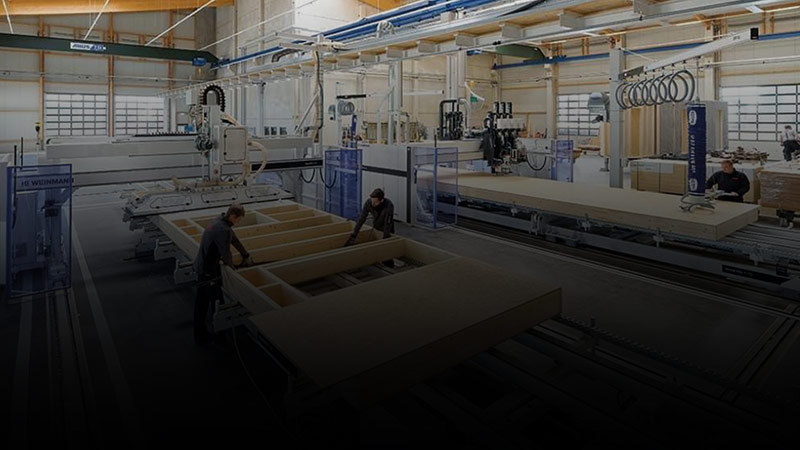
Off-site construction is undergoing a shift, and according to leaders at Graitec and Metaligna, we’re only at the beginning. During a recent industry webinar, Brandon Ionata, VP of Fabrication at Graitec, and Tony Marcantonio, VP and CTO of Metaligna, shared how digital tools, automation and close industry partnerships are accelerating change across the Canadian and North American off-site ecosystem.
From outdated software to fully coordinated 3D manufacturing models, here's what’s happening behind the scenes, and why it matters for the future of construction.
The problem: An industry left behind
Graitec opened the session with a stark observation: while many sectors have seen rapid technological transformation, the off-site framing industry has been “not just overlooked, but often completely ignored.”
Many companies still rely on:
- 25–30-year-old software
- Half-built tools that don’t connect to the manufacturing floor
- Processes that require rebuilding data several times over
Strucsoft:Bridging design and fabrication through Revit
Graitec’s solution emerged from recognizing a core truth: Revit is the dominant digital toolset in Canada’s off-site sector, but it can’t produce the manufacturing-level detail required on its own.
Strucsoft was created to close that gap.
How it works
Strucsoft leverages the Revit model as the single source of information, extending it with automation and manufacturing intelligence so builders can:
- Generate LOD 450 framing models at LOD 450 and above.
- Auto-populate framing details like studs, clips, screws, hold-downs, nail lines, sheathing and lifting points
- Produce CNC code, cut lists and shop drawings directly from the model
- Manage machinery outputs Connect Revit designs to the manufacturer’s machinery, allowing them to manage machinery outputs and the production process through a cloud-based, browser friendly interface.
This means fabrication teams don’t need to be Revit experts. They can visually modify CNC operations, create roll orders, schedule production and manage quality control, all without touching code or switching platforms.
Why partnership matters more than “software sales”
A theme that came up repeatedly: off-site builders are not typical software customers. Every company has:
- Unique materials
- Custom machinery
- Proprietary processes
- Different levels of digital maturity
Because of this, the company emphasized that Graitec works in partnership, not just in license agreements. The industry changes too quickly for static software. Solutions must evolve alongside builders, machinery manufacturers and engineering requirements.
This partnership model has led to rapid innovation, often driven directly by clients pushing technological boundaries.
Real-world impact: Faster design cycles, safer factories, smarter buildings
Several major case studies illustrate how digital tools are transforming off-site construction.
Digital Building Components (DBC): A long-term Graitec partner, DBC produces high-performance exterior wall systems, often delivering hundreds of panels per project. Their fully coordinated Revit models feed machinery directly, cutting design time by nearly 80% and improving field installation by up to 40%.
Blueprint robotics: Operating out of a massive, fully automated facility, Blueprint challenged Graitec to migrate their entire DFMA process mid-project. Graitec deployed more than 25 developers and technical staff, ultimately increasing wall panel output by 2.5×.
Performance Contracting used Structsoft to coordinate thousands of unique panels, dozens of wall types, and more than 170 opening variations for the world-famous structure.
While not Canadian examples, they illustrate what’s possible, and Canada is catching up quickly.
Canadian innovation: Metaligna’s digitally driven building system
Metaligna, based in Arnprior, Ontario, introduced how they are redefining panelized steel construction, and why they chose cold-formed steel over wood.
Precision manufacturing requires a material that behaves predictably. In the case of steel, it:
- Doesn’t warp, twist or absorb moisture
- Is non-combustible
- Reduces insurance costs
- Allows for cleaner, leaner engineering
- Performs consistently through Canadian winters
A fully digitized process
Metaligna owns the entire BIM stack, from architectural and structural design through CNC output and panelization. Using Strucsoft and Revit, they fabricate:
- Load-bearing light gauge steel walls
- Long-span trusses (up to 68 feet)
- Multiple floor systems, including ComSlab and Hambro options
Everything is modeled, coordinated and automated before it hits the shop floor.
The result?
40–50% faster installation than conventional construction, with a six-storey 10,000 sq. ft. building installed floor-by-floor in approximately four months.
The bigger picture: Why off-site needs digital transformation now
Both presenters highlighted the forces shaping the industry:
- A shrinking skilled labour pool
- Increasing demands for rapid housing
- Rising insurance and onsite risk
- Material cost volatility
- Pressure for predictable budgets and predictable timelines
Digital tools offer a path forward, not by replacing workers, but by enabling small teams to do more safely, efficiently and consistently.
Final takeaway: Off-site construction is on the edge of a breakthrough
The message from both Graitec and Metaligna was clear:
Off-site construction is no longer experimental. It’s an essential, scalable path for the future of building.
With digital models that drive fabrication, real-time coordination, CNC automation, and partners committed to innovation, the sector is finally catching up to industries that embraced technology decades ago.
The companies that invest early will set the standard.
The ones that don’t risk being left behind.
See Strucsoft to learn more.
Did you miss the webinar?
Interesting in learning more about off-site construction? Join us on the third Thursday of every month for in-depth discussions with industry leaders.
Email offsiteconstruction@unb.ca to be added to our mailing list.