Where nursing meets sociology: UNB’s interdisciplinary approach to health equity
Author: Kayla Cormier
Posted on Feb 25, 2026
Category: UNB Fredericton
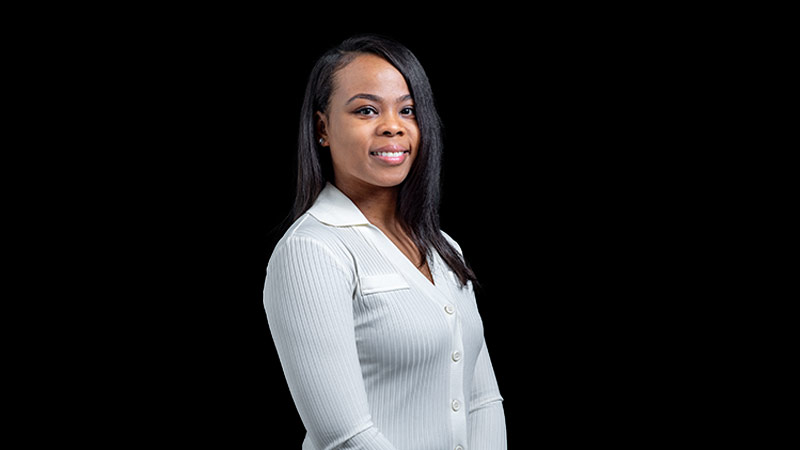
At UNB, nurse-sociologist Ruth Lue turns cutting‑edge research into curriculum—preparing culturally competent nurses for Canada’s changing demographics.
When Ruth Lue rediscovered a decade-old career plan, one sentence stood out: “Become a nurse sociologist.” Now that she’s living this dream, she smiles at the memory.
At the University of New Brunswick, Lue blends nursing and sociology to improve health outcomes for children and youth. Through her teaching and research, she’s embedding global health and equity principles into UNB’s nursing program, ensuring graduates leave with the tools to deliver safe care across cultures.
Lue, Global Health Lead and an assistant teaching professor in the faculty of nursing, is also a doctoral student in sociology at UNB.
She earned her bachelor of nursing and master of nursing degrees from UNB and brings to the classroom years of experience as a pediatric and neonatal critical care nurse.
Her research examines the health outcomes of children and adolescents exposed to adversity in Canada’s social environment, exploring how race, class and structural inequality contribute to—or mitigate—the impacts of toxic stress.
A changing landscape of care
Clinics and classrooms across Canada are serving increasingly diverse populations. Lue sees the challenge clearly: cultural safety is non‑negotiable, and early recognition of toxic stress matters.
“For a long time, health systems operated as if everyone had the same needs, but that’s not the reality,” said Lue.
“When newcomers arrive, clinics often don’t have the tools or skills to respond to cultural differences or migration-related health factors. Some questions my research is trying to answer are: How do we close that gap? How do we provide care that’s not just clinically sound, but culturally informed and truly holistic?”
Toxic stress is when stressors build up during childhood without enough support, and it can throw off the body’s natural fight‑or‑flight response. When it persists over time, it may be linked with a higher risk of chronic medical conditions and poorer health.
For Lue, this science is not abstract. Its impacts are seen by nurses and other healthcare professionals who meet children and families every day.
Lue has been reviewing the program’s courses to identify where global and planetary health principles can be effectively included in the curriculum. The goal is to provide faculty with a clear structure for embedding equity, sustainability and collaborative practices into their courses. In turn, students will encounter these ideas not just in theory, but in labs, simulations, case studies and clinical placements.
“What I’ve loved most is watching colleagues embrace these concepts and think about how global systems affect health here in New Brunswick,” said Lue.
“Turning big interdisciplinary ideas into practical curriculum pieces isn’t easy, but seeing it come to life in our program—and knowing it will shape how future nurses practise—is incredibly rewarding.”
UNB’s interdisciplinary approach supports this ecosystem, with nursing, sociology and global health each informing the other.
Lue’s doctoral work, which combines social theory with statistical methods, helps students connect the dots between how policy, economics and migration patterns can show up in patients as stress, symptoms or access barriers.
By incorporating contemporary research into teaching, Lue says nursing graduates will leave with an “extra, important layer” of understanding.
“They learn to ask better questions: What’s happening for this child at school, at home and in their community? Are there socioeconomic and structural factors contributing to stress? How do we support family warmth and stability? What does cultural safety look like in practice?”
For students with limited exposure to diverse communities, Lue’s courses help build confidence and competence.
“Our students are learning to see health through a wider lens,” Lue said. “It’s not just about symptoms—it’s about context. That perspective helps them deliver care that’s both clinically sound and culturally safe.”
A global view with local impact
UNB’s partnerships broaden this perspective. Lue will work in close collaboration with Manipal’s 2026 cohort to connect students’ global perspectives with local practices.
The result will be a classroom alive to the ways different cultures and their systems affect health in New Brunswick. Factors like climate change, migration patterns, planetary health and the social determinants of health all inform how nurses practise here at home.
Lue is also a 2025–26 CAnD3 fellow (Consortium on Analytics for Data-Driven Decision-Making), a competitive 12‑month training program that upskills Canadian social science graduate students in interdisciplinary data science, policy and knowledge mobilization applied to aging societies.
“The CAnD3 program offers students from across Canada and internationally unparalleled opportunities to develop their professional networks and take their social inquiry skills to the next level,” said Dr. Neeru Gupta, professor of sociology and UNB’s co-investigator on the SSHRC-funded partnership. “Ruth’s strong analytical background and keen interests in turning population research into policy-actionable insights made her an easy choice to recommend for this program.”
For Lue, the fellowship has provided a structured approach to planning research, conducting analyses and communicating findings clearly. It complements her work by strengthening the ways evidence can be shaped into policy and practice.
Lue says the fellowship will help her reach her long-term goal of informing more equitable health and social policy in Canada by grounding decisions in data, theory and lived clinical insight.
She sees UNB as the right home base to reach those goals.
“If we can show how intentional we are about meeting the needs of a changing population, it highlights what makes UNB special,” Lue said.
“This is a place where ideas turn into action, and where students graduate ready to make a real difference.”