
Innovative UNB research advances make for a patently impressive year
Author: Jeremy Elder-Jubelin
Posted on Oct 6, 2026
Category: Faculty of Science , UNB Saint John , UNB Fredericton , Research
Ten patents were granted to UNB inventors during the 2025-2026 year — a high point of the past decade. Patents and similar intellectual property protections are ways that UNB researchers can bring their inventions to the marketplace, allowing new startups and established companies alike to leverage their innovations.
2025-2026 was a banner year for UNB research commercialization, with 10 patents granted in a 12-month period. That number ties 2017 and 2020 for the highest single-year result in the past decade.
Why patent research?
Patent protection is one of the many avenues researchers have at their disposal to help bring their discoveries out of academia and into the broader world. By filing for a patent, researchers can protect the intellectual property they’ve created while also working with industry to implement those inventions in processes, products, and practices.
Importantly for academic researchers, filing for a patent means they can also protect their ability to commercialize an invention while continuing to publish their findings.
Together, these patents represent part of our community’s contribution to the future: They represent new possibilities for treating cancer, for improved prosthetics controls, for sustainable refining and cleaner fuels, for smarter and more efficient electricity generation, and beyond.
Some researchers might have a specific outcome in mind when they pursue patent protection — creating their own company, working with a specific partner, or enabling other not-for-profit groups to use the technology freely, for example.
Even when researchers have a particular goal in mind, however, there is always the potential for an invention to be used in new and unexpected ways. That’s part of the reason many of the available patents from UNB are listed on ExploreIP, an IP marketplace platform developed by the Government of Canada’s Innovation, Science and Economic Development Canada (ISED) department.
Helping new ideas reach the right people
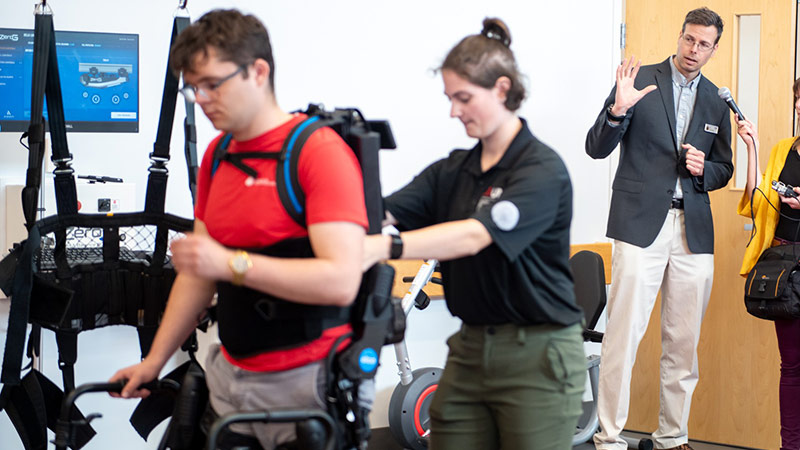
In all these cases, research teams can access support through UNB’s Research & Innovation Partnerships team.
While specific rules about who can claim ownership of an invention is guided by collective agreements, in general UNB has an inventor-owned policy. This means that even when it was created by a faculty member during their employment, the ownership of the invention generally rests with the person and not the university, and they can choose whether and how to commercialize their invention.
What if a researcher wants to see their technology brought to market, but isn’t able or interested in doing so themselves?
To support those goals, UNB has a process whereby inventors can assign their intellectual property rights to UNB, in exchange for assistance from UNB’s intellectual property, knowledge transfer, and technology transfer staff. This support includes access to expertise and dedicated funding for intellectual property protection and specialized funding and agreements support.
Obtaining a patent can take time — sometimes years — and effort to obtain, and there are financial costs and complex processes associated with seeking one. That’s part of the reason many researchers take advantage of the support offered. Additionally, UNB is able to help offset the costs through internal funds, as well as through special funds — such as those from Springboard Atlantic — that are put in place to help foster the province and region’s innovation ecosystem and economic success.
Examples of success
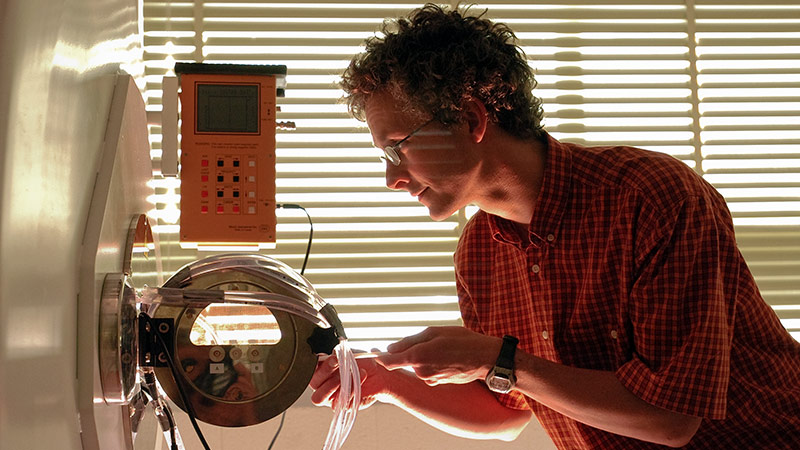
The 10 patents, which cover eight technologies protected in one or more jurisdictions, granted last year to UNB recipients are:
Patent 1:
“Methods of dynamic mechanical analysis using nuclear magnetic resonance” (US12444526, USPTO), a U.S. patent granted on Oct. 14, 2025, to Dr. Igor Mastikhin, Will Selby, and Dr. Phil Garland.
- This patent covers a novel, compact, and portable magnetic resonance device designed to analyze the properties of vibrating tissue samples. The invention could help create a low-cost, point-of-care diagnostic solution for the early detection of conditions like foot ulcers and liver fibrosis. It works on similar principles to magnetic resonance elastography, a technology that combines MRI with low-frequency vibrations invented at Mayo Clinic.
Patents 2 and 3:
“Compositions and methods for inhibiting blood cancer cell growth,” granted as an Indian patent (IN577460) on Jan. 5, 2026, and a U.S. patent (US12605352) on April 21, 2026, to Dr. Alli Murugesan, Dr. Anthony Reiman, and Dr. Mohamed Touaibia (Université de Moncton).
- This pair of patents is based on Dr. Alli Murugesan’s ongoing research into the cancer-treating properties of propolis, a resinous, glue-like substance made by bees. This patent covers potent analogs of a major bioactive compound found in propolis, caffeic acid phenethyl ester, which the researchers have found inhibit the growth of myeloma and lymphoma cancer cells.
Patent 4:
“Powered lower limb devices and methods of control thereof” (CA2947625, Industry Canada), a Canadian patent, granted to Dr. Jon Sensinger and Christian Grandmaison on Feb. 3, 2026.
This patent covers a new, compact architecture for lower-extremity exoskeletons, including a modular actuator design and the methods for controlling it. Together, these enable lower-cost solutions allowing for more natural walking with an artificial limb. The same actuator design — the part that causes the limb to move at the joints — can also be used for all three joints in lower limbs: hips, knees, and ankles. Together, this solution addresses limitations in current designs and enables a user to move at different walking speeds, including their naturally preferred gait.
Patents 5 and 6:
“Method for producing a high-phenolic-content biooil,” granted as a European Unitary patent (EP4251708C0) and a validation of this patent in the United Kingdom (EP4251708(GB)), on Feb. 11, 2026, to Dr. Gobinda Saha, Disha Bisto, and Dr. Muhammad Afzal. The unitary patent process allows a patent to be issued in multiple European Union countries —in this case, it was granted in 18.)
- These two patents cover a new formulation for a long-lasting, low-viscosity thermoplastic polymer, one based on forestry by-products rather than petroleum. By using waste from the forestry sector as the raw material for plastic, both the environmental impact and the pressure on petroleum fuel stocks can be reduced.
Patents 7 and 8:
“Magnetic resonance methods and devices for characterizing rheological properties of a fluid” (US12560665, USPTO), a U.S. patent granted to Dr. Bruce Balcom, Michael M. B. Ross, Dr. Jiangfeng Guo (postdoctoral fellow), Dr. Ben Newling, and Devin Morin on Feb. 24, 2026.
“Magnetic resonance methods and devices for characterizing a pattern of flow of a fluid” (US12578291, USPTO), a U.S. patent granted to Dr. Bruce Balcom, Dr. Jiangfeng Guo (postdoctoral fellow), Dr. Ben Newling, Mary-Margaret Lawrence, and Devin Morin on March 17, 2026
- These two patents cover a pair of new inventions for measuring and describing how fluids flow. Understanding the particular ways a fluid moves or responds to force matters in many industrial processes and sectors because it influences product quality, manufacturing efficiency, and customer experience. The inventions included in these patents could enable a more compact and cost-effective solution for characterising flow properties than what is currently available in industry.
Patent 9:
“Single-phase voltage source inverter circuit with power filter reduction,” (US12609604, USPTO), a U.S. patent granted to Guanghong Song, Hassan A. Hassan, Dr. Liuchen Chang, and Dr. Bo Cao on April 21, 2026
- Power inverters convert power from direct current, the type of electricity produced by solar panels, windmills, or batteries, for example, to alternating current, the type of electricity normally delivered to your home or workplace by power lines. Inverters can also be used for specialized applications like refrigerator compressors, heat pump motors, or variable-speed motors. This patent covers a design for a new inverter that reduces the size of the power filter needed for grid interconnections, allowing for smaller, more power-dense inverter systems.
Patent 10:
“Magnetic resonance method and system for characterizing circular Couette flow of fluids” (US12625100, USPTO), a U.S. patent granted to Dr. Igor Mastikhin and Will Selby on May 12, 2026. [Canadian patent granted in 2024]
- As with two of the other magnetic resonance patents, this patent supports industrial advances in flow analysis. This patent, however, covers a particular innovation that moves a sample in a circular fashion between two surfaces. This, along with a different arrangement of magnets, enables fluid characterization analysis with a smaller volume sample than is generally required for pipe-based analysis.
What comes next?
A new discovery is an important moment, but still only one moment in a larger process.
Some researchers may shift some of their efforts into their own startups, or into working with partners on implementing the technology; others may wait for the right collaboration opportunity to come along. Some inventions, unfortunately, never find the right opportunity to be implemented.
In any case, for researchers, the work continues: curiosity drives them forward, and there’s always another question to answer, more knowledge to discover, and more inventions to be dreamt up.