University of New Brunswick researcher studies a hidden factor in military readiness: insufficient sleep
Author: Tim Jaques
Posted on Sep 1, 2026
Category: Research , UNB Fredericton
This story is the first part of a series dedicated to the University of New Brunswick’s important role in furthering Canada’s defence capabilities. UNB is a national leader in defence-aligned research, helping protect Canadians and strengthen sovereignty through applied innovation, trusted partnerships, and made-in-Canada expertise. UNB advances cutting-edge research and develops the talent and technologies that support Canada’s military, governments, critical infrastructure, and citizens.
Dr. Nicholas van den Berg's research at the University of New Brunswick examines how sleep affects military readiness and explores technologies that may help personnel perform at their best when rest is limited.
A soldier who has gone without sleep may still be able to haul equipment and carry out physical tasks. What often slips first is judgment.
Canada's renewed focus on protecting its sovereignty has drawn attention to military capability. While new equipment is part of that, so are the people expected to carry out missions in difficult conditions, often with little sleep and limited recovery time.
That reality is behind research underway at the University of New Brunswick, where Dr. Nicholas van den Berg examines how sleep, recovery, and human performance affect military readiness in demanding environments.
Van den Berg, an Assistant Professor of Psychology, builds on his past work with military and research partners across NATO.
“Humans are at the core of military performance,” he said.
“Advances can be made through technology and equipment, but it is humans who are on the receiving end of these technologies and who are actually driving this equipment for the mission.”
The human side of readiness
Van den Berg earned his doctorate in psychology with a focus on behavioral neuroscience, examining how sleep supports memory and learning. He came to UNB in November 2025 after working at the Royal Military Academy in Belgium, where he studied human performance in military settings.
“I was ‘the sleep person’ there,” he said.
The experience broadened his perspective. For years, much of the attention around readiness centred on physical conditioning. Sleep has gained better recognition recently.
“Sleep is as important as eating well and exercise for both physical and mental performance, and for resilience.”
Those lessons guide the research program he is building at UNB.
Military personnel often face disrupted sleep, harsh weather, physical strain, stress, isolation, and long periods away from home.
While each factor can affect performance on its own, van den Berg is interested in how they interact.
“Exercise, diet, and now sleep have finally become appreciated in military circles. These work together to show military readiness.”
What happens in extreme environments
Some of van den Berg's previous work focused on military training in northern Europe, particularly Finland.
The research examined how personnel adapt when cold temperatures and fatigue become routine parts of daily life. It also investigated environmental factors that can affect performance, such as the effects of fuels used to heat tents, which can threaten soldiers’ health, sleep quality, and long-term combat readiness.
The European findings are relevant to Canada as attention increasingly turns to operations in the North.
He welcomes recent investments in northern defence capabilities.
“It's promising to see that there's that strategic investment in defence for Canada's Arctic,” he said.
From the laboratory to the field
Most sleep research takes place in controlled environments. Military operations do not.
To bridge that gap, he is exploring the use of wearable devices so researchers can monitor brain activity while sleeping outside a laboratory. The approach helps researchers collect information in settings that more closely resemble real military conditions.
Wearable brain-monitoring technology could also offer a new way to keep soldiers sharp even when ideal rest isn’t possible. Through his research, van den Berg is hoping to test a headband that tracks brain activity during sleep and delivers tiny sound pulses to the brain at just the right moment.
The goal is to gently boost “slow-wave” sleep—the deep stage of sleep that’s closely tied to physical recovery—so that soldiers wake up better restored and able to perform physically, even after demanding training or operations.
This may eventually be used to enhance “sleep spindles,” brief bursts of brain activity linked to memory and thinking skills. If that works, it could improve decision-making, attention, and mental readiness in the field.
He describes this as a promising, non-pharmacological way to get more benefit from whatever sleep soldiers can manage, potentially improving both their physical stamina and their cognitive performance under pressure.
“It's still early days of exploring this technology, but there’s strong evidence to suggest it certainly will help,” said van den Berg, adding that researchers hope to learn whether the technology can improve recovery when uninterrupted sleep is difficult to obtain.
Benefits beyond defence
This research has clear military applications, but he believes its impact could extend much further.
A lack of sleep may not immediately reduce a person's maximum physical effort. Mental sharpness often declines first. Someone can remain physically capable while becoming less accurate or making poorer decisions.
That distinction matters to civilians, too.
Many occupations require people to remain alert despite long hours or disrupted sleep. The same questions that matter to military personnel also matter to paramedics responding to emergencies in the middle of the night. They matter to health professionals working long shifts, and to anyone whose decisions carry consequences.
The next step is determining whether emerging technologies can lessen those effects.
“This could be a game-changer in the field,” said van den Berg. “Not just for the military, but for civilians as well.”
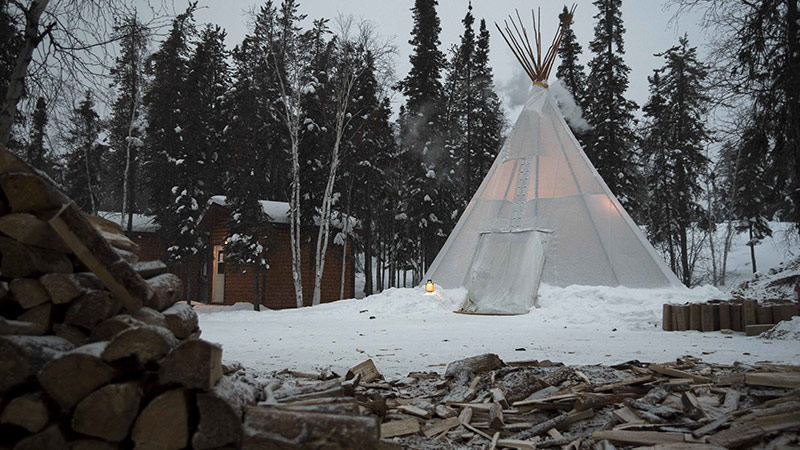
Photo 1: Canadian military members deployed on Operation NANOOK-NUNALIVUT (Op NA-NU) sleep in their shelters in Yellowknife, N.W.T., on March 2, 2021. (Photo: Cpl. Tori Lake, Canadian Armed Forces).
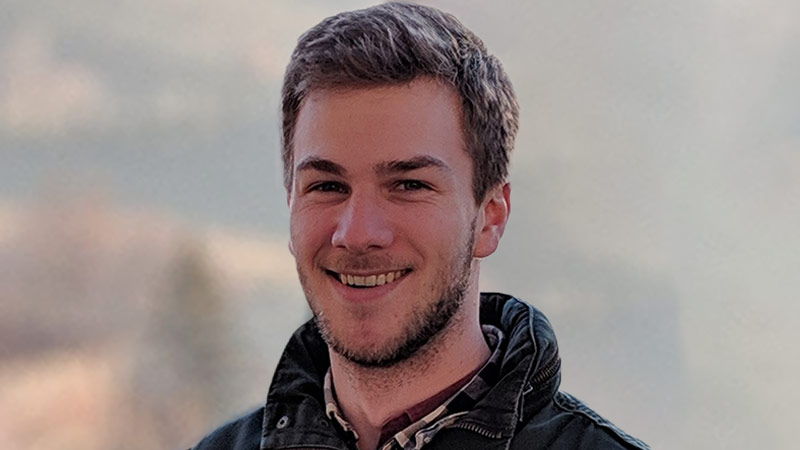
Photo 2: Dr. Nicholas van den Berg.