Who will power Canada's nuclear energy future? UNB is helping prepare the workforce
Author: Hilary Creamer
Posted on Aug 7, 2026
Category: UNB Fredericton
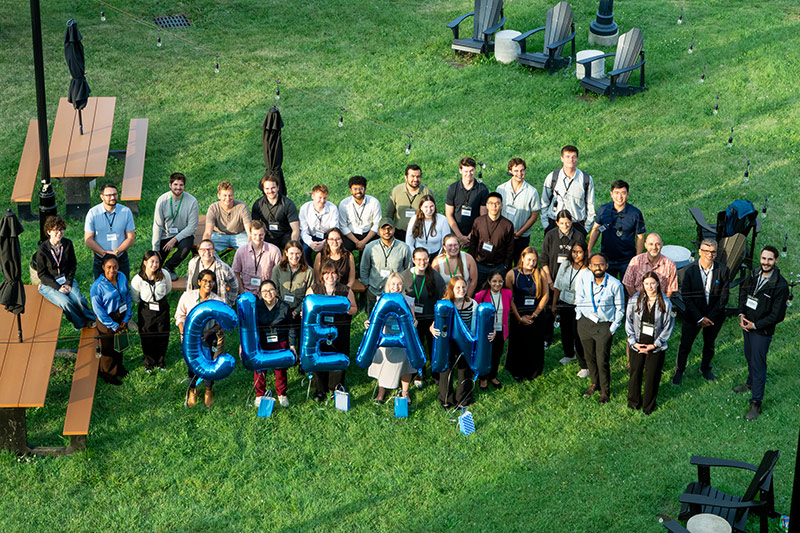
As demand for skilled workers grows across Canada's nuclear sector, UNB is connecting students with industry, research, and career opportunities while helping build the workforce of the future.
Canada needs more skilled workers to support the future of nuclear energy, and UNB is helping to prepare them.
For Camilla Drost (BScE'25), that preparation has already opened doors she never expected.
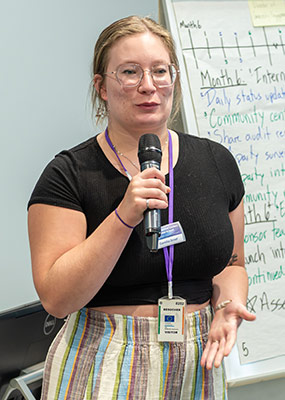
Now a master's student in chemical engineering at UNB, Drost is participating in CLEAN CREATE (Canada's Life Cycle for Existing and Advanced Nuclear), an NSERC-funded training program that helps students develop the technical and professional skills needed for careers in the nuclear sector.
Through CLEAN CREATE, Drost has connected with researchers and industry professionals from across Canada, building valuable relationships and gaining insight into the nuclear sector.
Beyond the program and through her broader involvement with nuclear research at UNB, she has also had opportunities to travel to Belgium, Norway, France and Germany, experiences she says, that helped deepen her understanding of the field.
Last week, Drost traded the role of traveller for tour guide as students and researchers from across Canada came to UNB for Nuclear Energy Week 2026, which included the inaugural CLEAN CREATE symposium. The event brought together students, researchers, industry leaders, and government representatives for training, professional development, and networking focused on the future of nuclear energy in Canada.
Preparing tomorrow's workforce
As Canada works to expand energy infrastructure and meet growing electricity demands, the nuclear sector faces a significant workforce challenge. One of the goals of Nuclear Energy Week was to explore workforce needs while creating pathways for students to enter the field.
For Drost, one of the biggest advantages of CLEAN CREATE has been direct access to industry professionals.
"One thing about CLEAN CREATE so far that I've noticed is that they make sure we're talking with professionals," she said. "It's been cool having that connection and interaction with people who can give you advice about the industry and teach you from their own experience."
Those connections are intentional, said Dr. Olga Palazhchenko, Associate Professor of Chemical Engineering at UNB and director of CLEAN CREATE.
"Our mandate is workforce readiness," she said. "If we're going to be building [new nuclear energy] plants in five or six years, then the workforce needs to be there now."
More opportunities than students realize
Throughout the week, students and researchers toured Point Lepreau Nuclear Generating Station, the Canadian Nuclear Laboratories cyber range, the Marine Additive Manufacturing Centre of Excellence, and participated in networking and professional development sessions.
For Drost, one of the most important lessons has been discovering the variety of career paths available.
"My big takeaway has been that there are so many more [career] options than the standard nuclear engineer," she said. "You can go way beyond that."
"The possibilities are endless," Palazhchenko agreed.
"Nuclear is looking for biologists and for chemists and radiation technicians, and then also for soft skills like project managers and communications professionals."
This need for skilled workers is growing faster than the talent pipeline.
According to Palazhchenko, employers, utilities, and research organizations are increasingly competing for the same graduates.
UNB's CLEAN CREATE program addresses that issue directly.
Why UNB stands out
UNB is also the only university east of Ontario with substantial nuclear programming, giving students in Atlantic Canada access to specialized education, research and industry connections close to home.
UNB has a long history in nuclear education and research through the Centre for Nuclear Energy Research, which was founded in 1991. The university maintains strong partnerships with organizations including NB Power, Atomic Energy of Canada Limited, and Canadian Nuclear Laboratories, and has expanded its nuclear course offerings and research infrastructure in recent years.
Drost believes UNB's program offers something unique.
"One thing that's particularly special about UNB is that, yes, we have a small program, but it is a very integrated team," she said. "Our offices are adjacent. You can walk over and have a chat with somebody on the other side."
She also credits the program with introducing students to opportunities they may never have considered.
"They do a good job of educating undergraduate students on the nuclear side," she said. "Just that little bit of exposure is something that encourages them to pursue careers in nuclear."
A future of possibilities
As someone who regularly speaks to middle and high school students about careers in the sector, Drost says many are surprised to learn how broad the field really is.
"If you're even remotely interested, you could be involved in nuclear in almost any capacity," she said. "There is everything from medical isotopes to the energy generation side."
For students considering their future, Drost's message is simple: there is a place for them in the industry.
And as Canada works to build the workforce needed to power its nuclear future, programs like CLEAN CREATE are helping ensure those students are ready when opportunity comes calling.