
New funding will support University of New Brunswick research in microplastics, privacy-preserving data science, and aluminum refining
Author: Jeremy Elder-Jubelin
Posted on Aug 20, 2026
Category: Research , UNB Fredericton , UNB Saint John
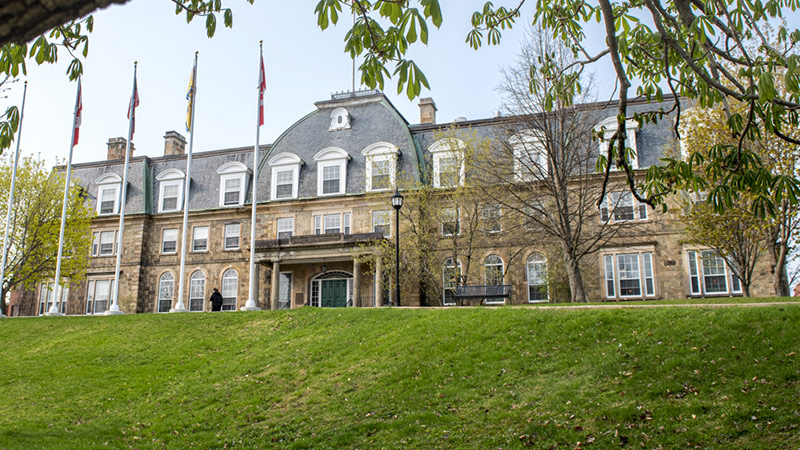
New funding from the Canada Foundation for Innovation (CFI) will support three research projects at UNB that address pressing, challenging issues. The funded projects will improve our ability to trace microplastics in the environment; provide reliable and realistic synthetic health data that enables better decisions while protecting privacy; and make aluminum refining more efficient and sustainable.
New funding from the Canada Foundation for Innovation (CFI) will support three research projects at UNB that address pressing, challenging issues. The funding, awarded through the CFI’s John R. Evans Leaders Fund, was announced on Aug. 20. Across Canada, 357 projects were awarded $118 million in total funding.
“Funding from the Canada Foundation for Innovation enables some of the groundbreaking and impactful research that happens here at UNB,” said Dr. David MaGee, Vice President of Research at UNB.
“We are thankful for the CFI’s continued support of our university, and for their support for these researchers in helping us collectively address the growing impact of microplastics, make better healthcare decisions while protecting privacy, and improve the environmental sustainability of manufacturing and energy systems.”
Dr. Zunaira Asif (Engineering) and co-applicant Dr. Ikrema Hassan (Engineering) have been awarded $150,000 for their research on improving the ability to detect and trace microplastics in the environment.
Microplastics are a growing concern for scientists, governments, individuals, and others. However, comprehensive, standardized data on the topic is still lacking, especially for the smallest particles. Asif’s project will use high-tech equipment, including drones, Raman microscopes, and advanced computing, to find, identify, and track different types of microplastics across air, water, and sediment. In doing this, Asif’s research will improve the datasets available to scientists and policymakers for environmental monitoring. It will also train tomorrow’s research and industry experts to use these tools and techniques.
Asif’s project has also received $14,616 in support from UNB.
Dr. Scott Bateman (Computer Science; Data Science and AI Research Institute) and his co-applicants Dr. Stijn De Baerdemacker (Chemistry; Data Science and AI Research Institute) and Dr. Ted McDonald (Political Science; DataNB) have been awarded $97,026 for their Machine Learning Health Vault project.
This project will combine expertise in advanced AI and in administrative data research to create secure, privacy-preserving synthetic health data. “Synthetic data” is data that closely mirrors the real thing—in this case, people’s health information—based on detailed patterns, but without corresponding to a real person’s information.
By creating data that is realistic without being real, the team hopes to support better, data-informed policy decisions and patient care made without risking exposure of New Brunswickers’ personal health information.
The project has also received $48,513 in support from UNB.
Dr. Barry Blight (Chemistry) and co-applicant Dr. Kyle Rogers (Chemical Engineering) have been awarded $150,000 to bring a revolutionary new approach to aluminum recycling closer to life. The project builds on their earlier discovery of a sustainable, highly efficient technique for aluminum dross digestion. This method reduces aluminum refinery waste, and produces specialized materials and large quantities of green, zero-carbon fuel.
Blight and Rogers will use the funding to build a specialized lab to further analyze the materials and to scale up the process, bringing it a step closer to an industrial-scale solution.
Their research has also received $133,349 in support from UNB and $150,000 from ResearchNB.