
UNB researchers discover new biological process in plants that could revolutionize the production of important medicines
Author: Jeremy Elder-Jubelin
Posted on Jul 16, 2026
Category: Faculty of Science , UNB Fredericton , Research , UNB Saint John
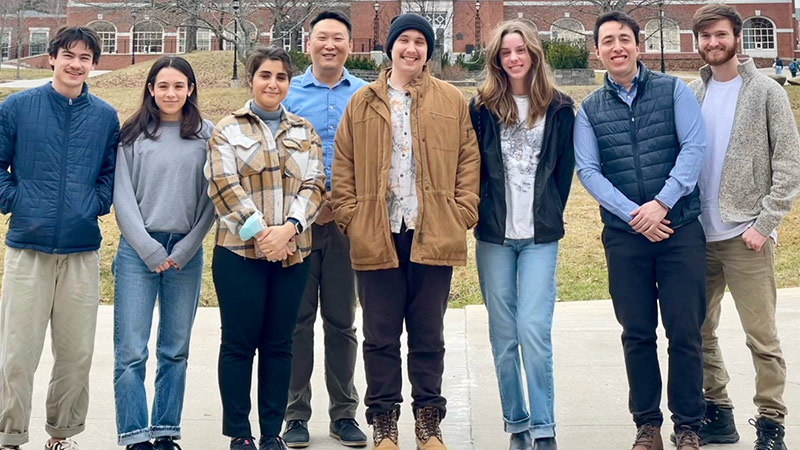
A University of New Brunswick research team led by Dr. Yang Qu, collaborating with researchers from Westlake University and Zhejiang University in China, has discovered a previously unknown mechanism involved in the creation of certain compounds, including one crucial to the production of a chemotherapy drug so important that it is listed on the World Health Organization’s List of Essential Medicines. Along with their groundbreaking discovery of an unknown plant biochemistry process, the research teams also demonstrated that it could be used to increase the production of an essential precursor for rare, cancer-fighting compound by up to nearly 100,000 per cent.
A new article published today in Science, one of the world’s foremost academic journals, presents a new discovery in plant biology that unlocks significant advances in the production of plant-derived compounds, including some used in vital cancer-fighting drugs.
Dr. Yang Qu, an associate professor of chemistry at UNB, led the UNB research team, which included seven students. He and the team also collaborated with the study’s fellow principal investigators, Dr. Jiazhang Lian at Zhejiang University and Dr. Yajie Wang at Westlake University, along with their respective research teams.
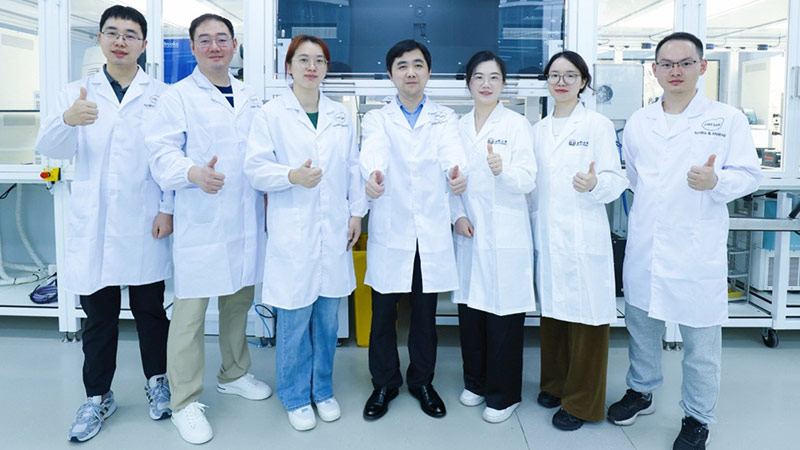
The researchers discovered a new scaffold protein—a protein that physically organizes enzymes for biochemical reactions in plants.
While scaffold proteins have been recognized for some time, this is among the first discovered to play a role in plant metabolic processes. This is also the first time one has been discovered in the Madagascar periwinkle (Catharanthus roseus), and that is involved in the creation of vinblastine. In the decades of previous research in this area, the proteins discovered in the production of this type of compound—called monoterpenoid indole alkaloids—have been enzymes that carry out individual chemical reactions.
In contrast, this scaffold protein works in two new ways. First, it physically arranges these enzymes to help their reaction, without directly being involved in it. Second, it also enhances the activity of one of those enzymes that it arranges, making the process more efficient. This dual function is one that the researchers say has not been observed previously in other scaffold proteins.
In addition to discovering a new mechanism in plant biology—showing that scaffold proteins can organize specialized metabolic pathways—the research has immediate applied benefits for the world, rooted in the metabolic process the researchers were examining.
The scaffold protein they discovered, which they call VinBLAST, is one that has important implications for global health, as it is part of a process used to create the drug vinblastine.
Vinblastine is an important chemotherapy drug derived from a compound found only in the Madagascar periwinkle. The compound is so complex to produce—researchers have counted around 30 steps involved in its creation—and so difficult to replicate outside of the plant that the drug’s production is, today, still limited to how much of the substance can be extracted from the plants themselves.
Further, approximately 500 kilograms of leaves from the plants are needed to produce every gram of vinblastine, a drug which has regularly been in short supply.
The Madagascar periwinkle has long served as an inspiration and a focus for Dr. Qu’s research because of this vital need, and because of the plant’s complex biochemistry. The focus on this plant also means that his group’s new scientific discoveries often come with immediate, beneficial applications.
After discovering VinBLAST, Qu and his colleagues demonstrated its function by incorporating it into an engineered yeast-based production system. This specific system produces catharanthine, one of the precursors—the middle-stage ingredients—needed to make vinblastine.
The results were startling—a thousandfold increase in the production of the precursor.
In addition to vinblastine production improvements, the research has potential wide-reaching implications for the biosynthesis of many other substances, including medically significant ones.
Recognizing this, the researchers have opted to share this new knowledge freely with the global community, where they hope others will incorporate this solution in their own research and development activities, and in the production of essential medicines.
Dr. Qu’s research was supported by a Discovery Grant from the Natural Sciences and Engineering Research Council of Canada (NSERC), as well as funding from NBIF/Research NB through their Research Professionals Initiative (RPI) and Research Assistantships Initiative (RAI) programs.
Photo caption: From left to right: Scott Mann (Co-first author), Hannah Tran (author), Negar Khorshidi, Dr. Yang Qu (author), Jacob Perley (author), Alyssa Seveck, Jonathan Garza-Garcia (Co-first author), Stephen Silliphant