
Wabanaki Governance program at UNB centres Indigenous leadership and treaty knowledge
Author: Tim Jaques
Posted on Jun 26, 2026
Category: UNB Fredericton
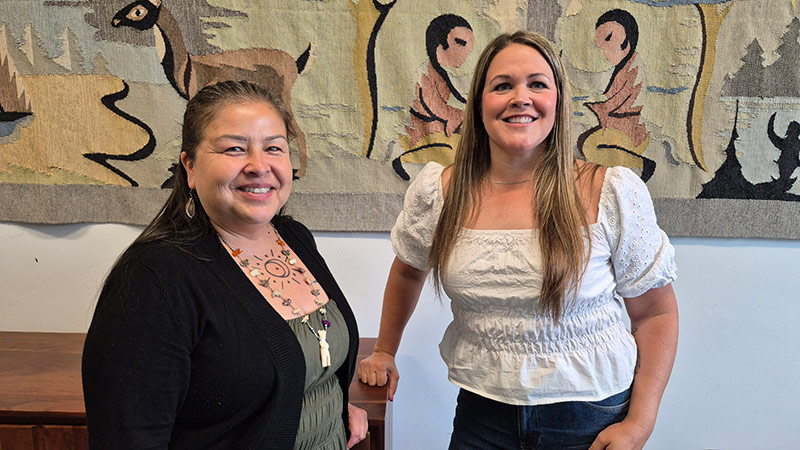
Indigenous-led program at the University of New Brunswick builds governance skills rooted in Wabanaki law, land-based learning, and community priorities.
In a forest at a land-based cultural camp near Tay Falls, N.B., people gather around a fire.
Guided by Indigenous Elders and Knowledge Keepers, they learn about treaties and history, share stories of traditional ways, and take part in cultural activities and ceremonial practices.
The setting is not a traditional university classroom, but rather one small part of the University of New Brunswick’s Wabanaki Governance program.
Based out of the Mi’kmaq-Wolastoqey Centre (MWC) on the UNB Fredericton campus, it builds leadership grounded in the knowledge of the Wabanaki nations—Mi'kmaq, Wolastoqey, Passamaquoddy (Peskotomahkati), Penobscot, and the Abenaki—and their laws, culture, and relationships.
The Wabanaki Governance program is an Indigenous-led certificate and diploma program that trains leaders in community governance, treaty, Indigenous rights, and policy. The program is designed mainly for Indigenous learners working within and outside of their communities. Non-Indigenous students are also welcome to be included so that they can learn how to build a valuable allyship through treaty relations.
Its broader purpose is to build capacity in Indigenous communities and support leaders working within and outside formal band structures.
“The goal behind it is to support the critical leadership that we need to advance treaties and Indigenous rights and relationships within the community,” said Natasha McAllister, governance and leadership program coordinator.
Grounding governance in Wabanaki worldview
The program is a relaunch of an earlier version that began in 2015. The MWC paused it in recent years to allow for a redesign centred on Wabanaki perspectives rather than colonial models.
“What we heard from our partners and community is that they really wanted to include even more Indigenous and Wabanaki-specific perspectives and worldviews into the program,” said McAllister.
The redesign now includes courses such as Wabanaki Economic Values and Community Development; Wabanaki Dispute Resolution; Netukulimk: Indigenous Approach to Resource Management; Indigenous Knowledge and Research; and Place of Art in Indigenous Community Healing.
Ramona Nicholas, Nihkanatpat (director) of the MWC, recalled how leadership once emerged in some Wolastoqey communities, with women deciding by consensus who would make the best leaders for their community.
“These were the women who were the heads of the households in the communities,” she said. “These women determined who was going to be the best to govern the community.”
Those approaches stand in contrast to structures imposed under the Indian Act, which still shape governance today.
“For far too long, those models were very colonial,” Nicholas said. “They didn’t represent the beliefs that were in our communities.”
Designed with community
Years of consultation with Wabanaki communities shaped the program. Organizers spoke with Elders, Knowledge Keepers, leaders, and community members.
“We just sat down and listened and asked questions,” McAllister said. “Then we brought it back and sent it out for feedback and asked people what they thought and revised it.”
That process continues. Indigenous community voices remain central to the program.
“Really, that’s where the voices come from,” Nicholas said. “They’re the ones that are going to be taking the courses.”
Respect for language, culture, and worldview shapes the teaching of governance. These are not separate topics, but the foundation of the program.
“I don’t think that we can separate language, culture and worldview,” McAllister said. “Wabanaki values and teachings always show up in how communities govern.”
“Language describes our relationship to the land,” Nicholas added. “It defines our place in this world.”
Learning online and on the land
The Wabanaki Governance program combines online learning with a required land-based course to reflect practical needs and Indigenous ways of learning.
Many students already work in their communities. Online delivery allows them to stay connected to their roles and families without having to move or commute to Fredericton for the course.
“We meet them where they are,” McAllister said. “They don’t have to relocate.”
The land-based course comes first. Students gather for several days to learn together on the land.
“They’ll be out there learning traditional teachings,” McAllister said. “They’ll be experiencing ceremony and thinking about themselves as leaders.”
The goal is to build relationships before moving into online learning.
“It creates that opportunity to build those relationships that are so important,” she said.
Nicholas said that connection is essential to Indigenous learning.
“As Indigenous people, we’re very connected to each other and to the land,” she said. “Being able to have that opportunity to do that at the beginning of this program, to bring everybody together, shows that everybody’s doing different things in life, but they’re able to help each other.”
Practical skills grounded in context
Courses cover treaty and Indigenous rights, governance systems, and negotiation. Students also complete projects in their own communities.
“They’ll be able to take what they’ve learned and apply it in a real-world way and benefit their community,” McAllister said.
The program addresses a gap many students have identified. Leadership training often comes through a colonial lens, with little connection to Indigenous community realities.
"What we heard repeatedly from students was a desire to understand governance and leadership in the context of their own communities," McAllister said.
"They wanted opportunities to explore how they could contribute in ways that reflect their culture, values, and community priorities. The program blends practical skills with Wabanaki perspectives.
Building confidence and future leaders
Graduates of the earlier version of the program have moved into leadership roles, including band councils and management positions. Some have gone on to further education.
“I’ve had students come into the program with GEDs,” McAllister said, “and watched them go from not being certain that this academic world is for them to having them now seek out educational opportunities and be excited to put themselves out there.”
Nicholas said the change is both practical and personal.
“It gives them that knowledge and the confidence to be able to do the things that they really want to do,” she said.
Interest in the relaunched program is growing. Students from across Wabanaki territory have applied, and some communities have asked about bringing the program to local leaders.
Open to allies but centred on Indigeneity
While it is centred on Indigenous learners, the program is open to non-Indigenous students.
It is grounded in Indigenous knowledge and community priorities, but the learning has relevance for anyone interested in governance, leadership, treaty relationships, and reconciliation.
Nicholas framed it in terms of treaty relationships.
“As a non-Indigenous person, do you understand that you’re also a treaty person, and that you’re a part of all of this as well?”
That understanding can shape how people work with Indigenous communities, and so it is important for non-Indigenous people to understand Indigenous perspectives.
Looking ahead
So far, there have been about a dozen applicants, said McAllister, with more expected as they complete the application process. This cohort will begin with the land-based course on August 20.
Success will be measured at the community level.
“The measure of success is going to be whether Indigenous communities are healthier and happier, and whether they are benefiting from what our students have achieved,” McAllister said.
Nicholas said that is the goal of the Wabanaki Governance program at UNB.
“If we have a good governance system, we’re all sitting around the table figuring out what we can do for the people that aren’t sitting at that table yet.”
Program details
The Wabanaki Governance program includes:
- Certificate and diploma options in Wabanaki governance
- Online courses with evening delivery for working students
- Required land-based course held at the start of the program in August
- Courses in treaty rights, governance systems, negotiation, and policy development
- Community-based projects that apply learning in real settings
Photo: Ramona Nicholas and Natasha McAllister