New research sheds light on complex relationship of hearing loss, social isolation and dementia onset
Author: Jeremy Elder-Jubelin
Posted on Mar 26, 2026
Category: UNB Saint John , DataNB , Research , UNB Fredericton
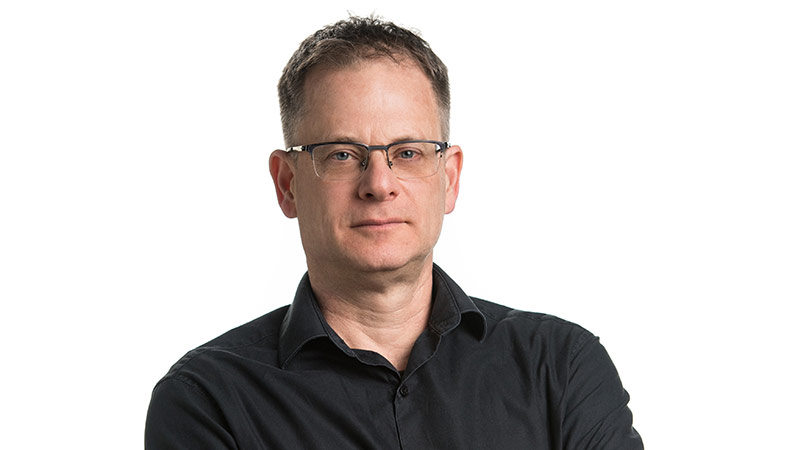
Analyzing large-scale survey data is helping researchers and medical practitioners better understand how a variety of factors, like hearing loss and social isolation, might affect your likelihood of developing dementia. New research involving an expert at UNB’s DataNB institute has been published that answers some questions, and raises new ones.
New research by a University of New Brunswick researcher has deepened our understanding of the relationship between hearing loss, social isolation and dementia.
“Despite an increasing body of evidence identifying a strong link between social isolation and dementia, and between hearing loss and dementia, how these factors interact to raise dementia risk remains unclear,” said Dr. Ted McDonald, a professor in the department of political science, an expert in data analysis, and director of UNB’s DataNB institute.
Like a lot of scientific research, the work answered some questions—and also raised new ones.
The researchers didn’t find the relationship between hearing loss and dementia onset that they would expect if there was a direct biological connection to both conditions. Instead, the study pointed to social factors that need further investigation.
“While we found that moderate to severe hearing loss also correlates with an increased likelihood of social isolation, the connection to dementia onset isn’t as clear. For instance, for people who are already socially isolated, hearing loss doesn’t seem to have much additional effect on dementia onset. However, for people who aren’t already socially isolated, the presence of hearing loss does have an effect.”
The research further revealed that the use of hearing aids to counter hearing loss seems to correspond to less social isolation and a less significant impact of hearing loss on dementia onset. These results suggest that the social factors of hearing loss may have a greater impact on dementia risk than do the biological links between hearing loss and dementia.
“By using large population surveys that track data over time, we hope to unpack some of the relationships between various factors associated with major health concerns like dementia,” said McDonald. “By understanding what factors contribute to dementia onset, our work can help support targeted interventions that can keep people healthier.”
The research team looked at the National Health and Aging Trends Study, an annual American survey that gathers information on a nationally representative sample of Medicare beneficiaries aged 65 and older. The survey includes validated measures of hearing loss and dementia onset, among many other details.
McDonald is no stranger to untangling and understanding large amounts of data in the pursuit of knowledge that can help make life better: for more than a decade, he has led DataNB, UNB’s administrative data research institute and the province’s designated data steward. Over that time, the institute has gone from an idea to a home for more than 120 datasets and the expertise needed to connect and analyze this data.
For almost twenty years, McDonald has partnered with a pair of Canadian ear, nose and throat (ENT) cancer surgeons to understand the connection between socioeconomic factors and ENT cancers.
When some of their colleagues shared their clinical observations about the complex relationship between hearing loss, social isolation and dementia, the surgeons decided to bring McDonald into the conversation to see what data science could tell them.
The group’s research was published earlier this month in The Journals of Gerontology: Series B.