Wisdom from the ancient world still matters
Author: Tim Jaques
Posted on Feb 23, 2026
Category: UNB Fredericton
UNB professor intends to prove through four radio broadcasts that ancient thinkers remain relevant to the modern world and its challenges.
When Prime Minister Mark Carney quoted the ancient Greek general and historian Thucydides in a Jan. 20 speech at the World Economic Forum in Davos, Switzerland, University of New Brunswick classics professor Dr. Matthew A. Sears saw an opportunity.
Not long after, he was on CBC Fredericton's Shift – NB to talk about it, and the response was strong enough that the station asked him to do a four‑part series.
Born from a public moment

Sears will host Wisdom from the Ancients, a weekly ten‑minute segment starting Feb. 24. Each of the four episodes links classical thought to current events.
"Vanessa Vander Valk, the host of Shift - NB, sent me a follow‑up and said that it was really interesting, and thought we could make a series out of this," he said.
Sears also co‑authored an op‑ed in the Globe and Mail responding to the speech. The spark was Carney's use of a stark line from the famous Melian Dialogue contained in Thucydides' History of the Peloponnesian War: "The strong do what they can; the weak suffer what they must."
Sears said people often mistake these words for Thucydides' own view. As the op‑ed put it, quoting another section of the dialogue, "It is in your interest to maintain a principle which is for the good of all—that anyone in danger should have just and equitable treatment."
Why the Melian Dialogue matters
The Melian Dialogue appears in the context of the Peloponnesian War, a decades‑long struggle in which Athens and its allies fought Sparta and its allies, culminating in Athens' defeat and the loss of its empire.
Athens, a sea power, demanded that the neutral island state of Melos submit and pay tribute.
The Melians told the Athenian delegation that the long‑term interests of all states, including mighty Athens, depended on respecting justice, and that it would not be just to punish Melos for wanting to remain neutral.
The Athenians framed their strength as the only thing that mattered, and said that tolerating neutrality would be seen by their enemies as a sign of weakness.
Athens destroyed Melos, killed all adult males, enslaved the women and children, and sent Athenians to colonize the island.
To Sears, the passage is not a manual for power politics. It is a warning about where the reliance on raw power alone can lead.
"My reading of Thucydides is that he's actually setting it up as a warning: if you behave like this, then the world that you're going to help create will ultimately turn back on you," he said.
And so, it did. Athens was eventually crushed in the broader war, stripped of its navy and even its city walls, then subjected to the control of its archrival, Sparta, for a year in which democracy was overthrown.
"Even the most powerful country on earth can't afford to alienate everybody," Sears said.
What the series will cover
Each episode will present a present‑day issue and then apply an ancient example to it.
One looks at general strikes. Sears will draw a line from modern walkouts to early Rome, where plebeians (the working people) once left the city and refused to work until patricians (the elite) granted legal protections.
"People who are in positions like the patricians rarely, if ever, in the course of history have given people things like privileges and rights unless they were forced to by a collective action," he said.
Another episode will examine democracy and the surprising view of Athenian democracts that selecting decision-makers by lottery from all citizens was preferable to voting for them.
Yet another will explore the fear of new technology, such as artificial intelligence.
The Greek philosopher Plato worried that writing things down rather than memorizing them would ruin our memories and affect our thinking, an early example of the fear of technological change.
"The fear of new technology unseating our humanity is not anything new," he said.
Scholars and public life
When a prime minister reaches back to Thucydides, Sears sees a duty for those who study that material to explain its meaning.
"I think that scholars have a responsibility to speak out, especially when something bears on their expertise," he said.
He argues that we still face variations of the problems the ancient Greeks and Romans faced. People worry about rising powers, declining powers, unstable alliances, bad leaders and the impact of new technology.
Ancient texts can help people think more clearly about their own world because human nature has not changed much.
"There are plenty of things worth knowing from the past that are important," he said.
“We're doing ourselves a disservice if we ignore the centuries of work that they produced on these questions.”
Sears hopes that the series shows how the humanities contribute to public understanding. He wants listeners to see them as practical tools for understanding life.
"I hope they get the idea that just because something is old doesn't mean it’s not worth listening to," he said.
"All of the things we study in the arts and humanities at UNB can have really enriching and useful applications in today's world."
How to listen
Shift - NB with Vanessa Vander Valk airs weekdays from 4 to 6 p.m. on CBC Radio One.
- Fredericton: 99.5 FM
- Moncton: 106.1 FM
- Saint John: 91.3 FM
Streaming: Available live and on demand via the CBC Listen app and website.
Past segments are also archived on the Shift – NB website.
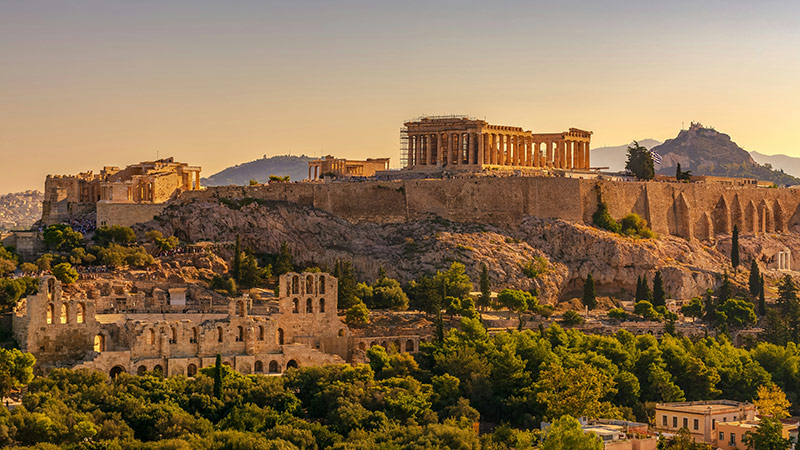
Photo 1: View of the Acropolis of Athens with the Parthenon and the Erechtheion from the Filopappou hill. (Constantinos Kollias/Unsplash)
Photo 2: Dr. Matthew A. Sears
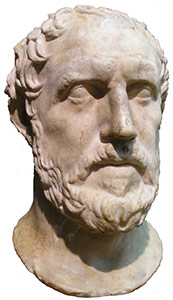
Photo 3: Bust of the ancient Greek general and historian Thucydides from the Royal Ontario Museum. (Captmondo/Wikipedia)