SDG month at UNB: Responsible consumption in daily campus life
Author: Tanyasingh Mokashi
Posted on Mar 18, 2026
Category: Opinion
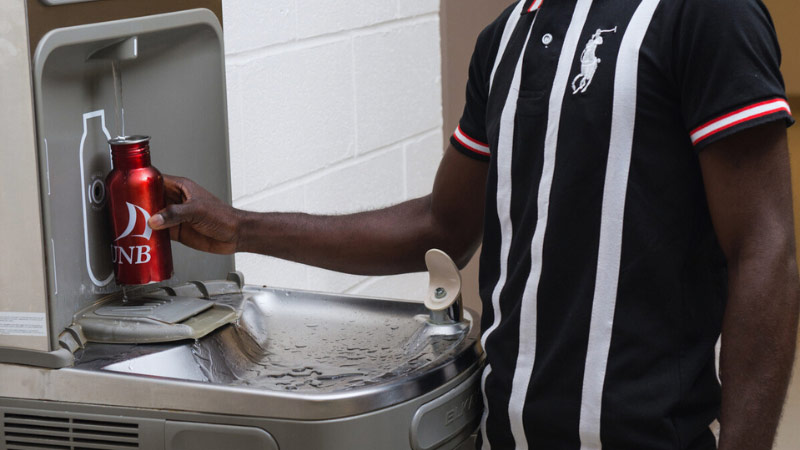
What happens to the coffee cup you grab between classes? Or the paper you toss after a long study session? These everyday choices are about a bigger conversation about sustainability. March marks SDG Month at the University of New Brunswick, a time to reflect on how everyday actions connect to the United Nations Sustainable Development Goals. One goal that relates closely to campus life is Sustainable Development Goal 12: Responsible Consumption and Production, which focuses on using resources wisely and reducing waste.
The United Nations Sustainable Development Goals (SDGs) provide a global framework for building a more sustainable future. SDG 12 encourages individuals, communities, and organizations to think carefully about how resources are used and how waste can be minimized. While the goal is often discussed at the global level, its principles are just as meaningful within the everyday experiences of a university campus. SDG12 includes targets such as reducing waste generation through prevention, recycling, and reuse, as well as encouraging more sustainable consumption practices.
At the University of New Brunswick, campus life offers many opportunities to practice responsible consumption. With thousands of students, faculty, and staff sharing classrooms, study spaces, and dining areas, even small shifts in behavior can create meaningful impact. Choosing reusable water bottles and coffee mugs, printing only when necessary, and carefully sorting recycling are simple actions that help reduce waste and support more efficient use of resources.
Responsible consumption is not only about individual habits; it also connects to the systems that support sustainability on campus. At UNB’s Fredericton and Saint John campuses, many buildings now include three-stream waste stations that allow materials to be sorted into paper recycling, waste, and refundable containers. Across the Fredericton campus, large wheeled blue bins are also placed throughout academic buildings and libraries, so students and staff can recycle paper, books, and cardboard. While not every building is equipped with three-stream stations yet, expanding them across campus is an ongoing effort.
At the same time, waste management systems continue to evolve as communities look for ways to reduce environmental impacts. Due to regional limitations, currently organic waste diversion is not widely implemented on campus. However, regional services include technologies that support more sustainable waste management. In the Fredericton region, waste is managed by the Capital Regional Service Commission. As organic materials in landfill waste break down over time, methane gas is produced and captured to generate electricity.
In the Saint John region, waste is managed at the Crane Mountain Landfill1. The landfill is operated by the Fundy Regional Services Commission and serves Saint John and surrounding communities. In addition, to capturing methane to produce electricity, the landfill also uses systems to monitor groundwater to protect the surrounding environment.
SDG month is a great reminder that sustainability is something we practice together. It invites the UNB community to reflect on how daily habits connect to global goals and how small actions across campus can create meaningful change. At UNB, sustainability continues to grow through everyday decisions. By being mindful of how we use and manage resources, each member of the campus community can contribute to Responsible Consumption and Production, showing how the smallest choices can make the biggest impact.
1Crane Mountain Landfill, “Fundy Regional Service Commission,” Fundy Regional Service Commission, 2024. (accessed Mar. 16, 2026).