Holocaust started with words, not camps, says UNB historian
Author: Tim Jaques
Posted on Jan 26, 2026
Category: UNB Saint John , UNB Fredericton
International Holocaust Remembrance Day highlights Dr. Cheryl Fury’s warning: ‘We are forgetting.’
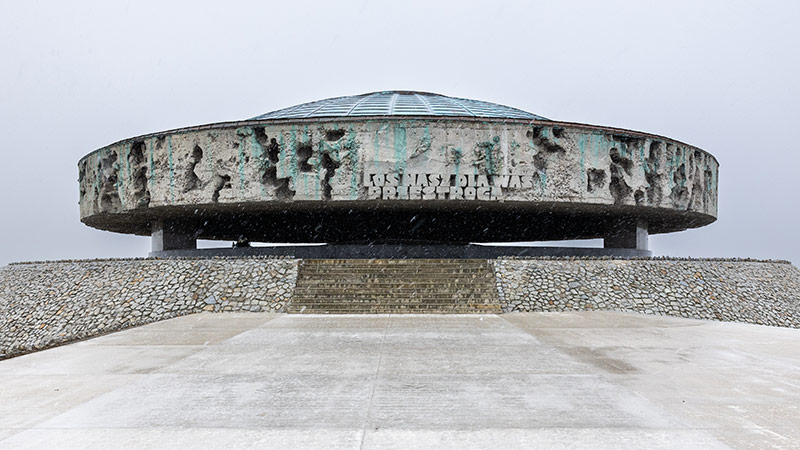
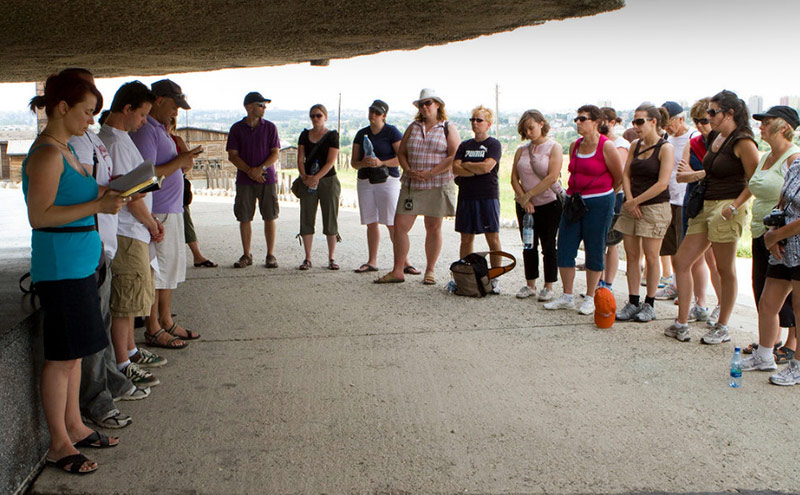
Dr. Cheryl Fury (BA'88, MA'90) stood with others at the edge of a monument filled with seven tonnes of human ashes at Majdanek, a former death camp the Nazis set up in occupied Poland.
Holocaust survivor Vera Schiff began to cry.
“It was the only time I saw Vera cry on that whole trip,” Fury said.
“We had a little memorial ceremony, and she said, ‘You know, some of my cousins are in there.’”
That moment in 2010, during the March of the Living, reshaped Fury’s life and work. Today, as a professor of history at the University of New Brunswick and a fellow of the Gregg Centre for War and Society, she teaches courses on the Holocaust and genocide.
Her reflections carry urgency as the world marks International Holocaust Remembrance Day on Jan. 27.
Why it matters now
Fury believes Holocaust education is critical as survivors die and extremist narratives spread.
“One thing that really terrifies me is that there are lots of polls and surveys that say that younger generations are losing any sort of collective sense of the Holocaust,” she said.
“I think Holocaust education is critical to any sort of curriculum.”
She warned that the Holocaust did not begin with the camps.
“It started with words. It started with hateful rhetoric,” Fury said.
“When we see ourselves as a society going down that road and othering a group or particular groups and blaming them, we are on a really dangerous slippery slope.”
From reluctance to witness
Fury did not set out to specialize in Holocaust studies. As an undergraduate, she found the subject overwhelming.
“I said, ‘This is not for me. I know it’s important, maybe one day I can teach about it, but I certainly can’t research it because it’s just horrible.’”
Years later, she joined the March of the Living, an educational program that brings people to Holocaust sites along with Holocaust survivors.
“It was life-changing,” Fury said.
“It took me months to even be able to talk about it, to find language around the experience. It was so profound to see the physical spaces. You’re never going to get that in a textbook.”
Walking through Auschwitz-Birkenau revealed its vast scale, but Majdanek left the deepest mark.
“Seeing seven tonnes of human ash was even worse than seeing rooms of hair and eyeglasses,” she said.
A friendship and a lesson
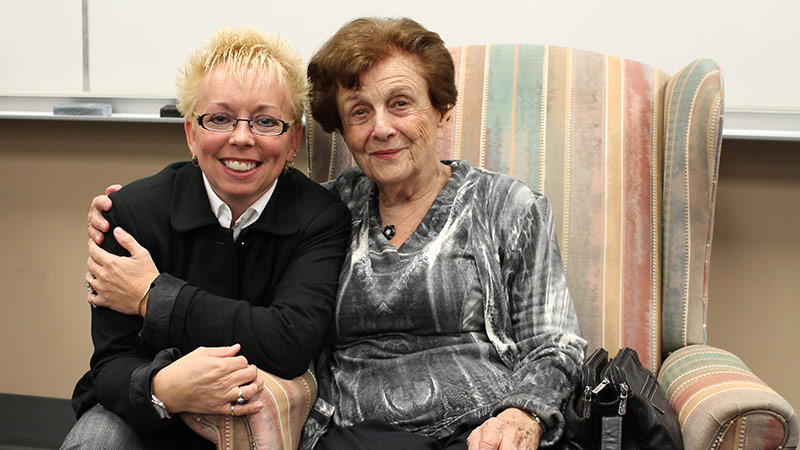
On that trip, Fury met Schiff, who had survived Theresienstadt but lost her immediate and her extended family in the Holocaust.
“She lost 50 people in her life. She had no cousins left,” said Fury.
Their bond grew into a collaboration on Schiff’s memoir, Surviving Theresienstadt: A Teenager’s Memoir of the Holocaust.
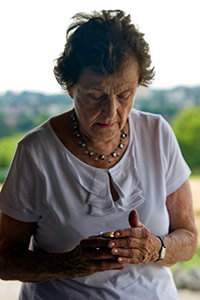
Schiff was herself an author, a member of the Order of Canada, and received an honorary doctorate of letters from UNB in 2012. She died in 2023.
“We just formed this wonderful friendship that was such a gift to me,” Fury said.
“Intellectually, academically, socially—you name it—there’s just so much that has informed my life and my work by my friendship with Vera.”
Working with Schiff reinforced Fury’s belief in the power of personal stories.
“Some of the best learning is to identify with one person and follow their story through the Holocaust,” she said.
“It's almost impossible for most of us to absorb the scale of millions of people persecuted and exterminated. It's easier to wrap our heads around one person's experiences.”
Fury now gives survivor memoirs to students and promotes them at campus events.
“That’s why my memoir course happened, because I thought this is a great way to teach empathy, but also to teach about the Holocaust,” she said.
Lessons for today
Fury sees echoes of the 1930s in current politics.
“I say to all my students that I feel like I’m living in the 1930s because there are so many similarities in the current world,” she said.
“Fascism really starts to have an upward trend when people are in crisis, and then you have this charismatic leader who promises easy solutions to complex problems.”
She stressed that scapegoating thrives in hard times.
“People just want to believe that strongman is going to put a chicken in every pot and make sure that your kids are educated and that there’s a roof over your head,” Fury said.
“There’s a real temptation in times of crisis to follow those leaders. Such leaders often try to bring unity through the persecution of one or more vulnerable groups.”
What she hopes students take away
Fury wants young Canadians to see the Holocaust as a human event with universal lessons.
“I hope that they understand the deepest, darkest parts of human nature,” she said.
“But I also try to emphasize the few rays of light in the Holocaust. We look at the Danes who rescued almost all their Jews. We look at some of the Righteous Gentiles and what they did.”
Vigilance, she said, begins with everyday choices when confronted with Holocaust trivialization, distortion or denial.
“We need to respond and say, ‘That joke isn’t funny,’ or ‘No, that’s completely wrong,’ or ‘Guess what, that event really did happen, and I can prove it,’” Fury said.
“I think we have a real responsibility to remember, but we are forgetting. That’s disturbing to me.”
Photo 1: The memorial at Majdanek, containing seven tonnes of human ash. (Photo courtesy of the State Museum at Majdanek).
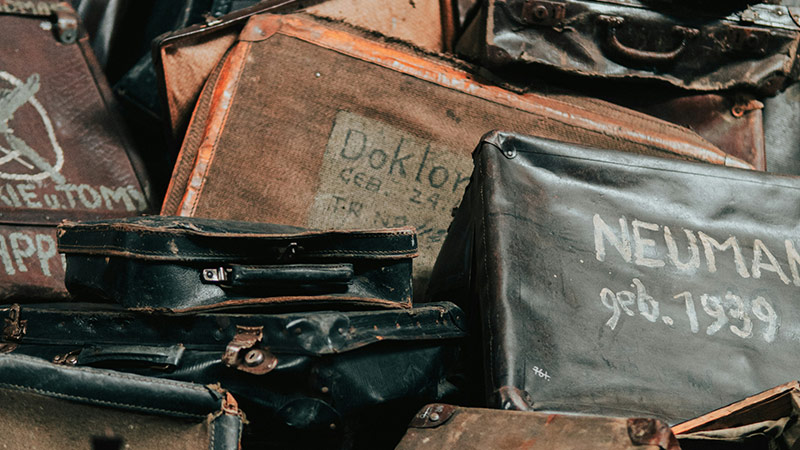
Photo 2: Suitcases and baggage confiscated from Holocaust victims by Nazis. (Photo courtesy Jean Carlo Emer/Unsplash)
Photo 3: Dr. Cheryl Fury, left, and the late Holocaust survivor and author Vera Schiff. (Photo courtesy Ocean Leigh Peters).
Photo 4: The late Vera Schiff lighting a memorial candle at Majdanek during the March for Life in 2010. (Photo courtesy Michael Rajzman).
Photo 5: A group holding a memorial at Majdenek during the March for Life in 2010, where Dr. Cheryl Fury met the late Holocaust survivor and author Vera Schiff. (Photo courtesy Michael Rajzman).