Simulation technology prepares UNB nursing students for the care of older adults
Author: Tim Jaques
Posted on Jun 8, 2026
Category: UNB Saint John , UNB Fredericton , Announcements
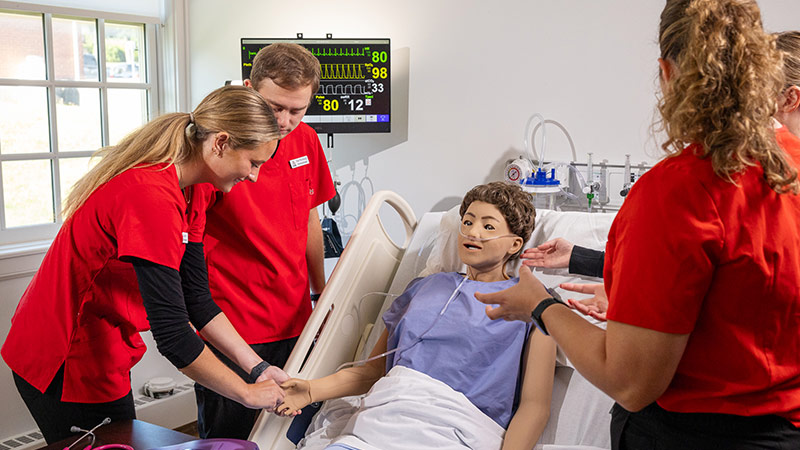
Technology-driven learning ensures that every student will encounter complex cases in older adult care.
Nursing students at the University of New Brunswick apply learning in two settings: clinical placements and simulation, where technology complements traditional teaching methods to build the skills needed to care for older adults.
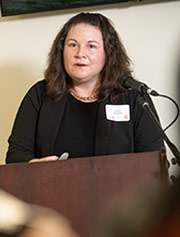
“Care of persons throughout their lifespan is an essential requirement of nursing education, but topics and content about older adults are a major focus and appear throughout the program,” said Claire Williams, acting associate dean and associate teaching professor in the faculty of nursing and health science.
Williams said students need real-world contact with older adults in clinical settings. This lets them use the communication skills they learned in courses and practised in simulation.
“Not everyone in the program has had the chance to interact with older adults, like grandparents or neighbours, and that can be stressful when their first experience with this group happens in a hospital,” said Williams.
Simulation fills experience gaps
The UNB Moncton site offers an accelerated bachelor of nursing program of six terms in two years, instead of the traditional four-year program. To be considered for the program, students are required to have a degree, or at least 46 credit hours, including specific prerequisites.
Clinical placements remain important, but simulation technology ensures students face situations they might not experience in a hospital. This technology gives students in the accelerated program exposure to different nursing settings, including those focused on older adults.
Both the Moncton site and the Fredericton campus use advanced high-fidelity mannequins, computer-based programs and virtual reality to simulate complex care situations. The Moncton site and the Fredericton campus received $500,000 in provincial funding over three years for simulation, including extended reality at both locations.
(Extended reality (XR) includes all immersive technologies, including virtual reality (VR), augmented reality (AR) and mixed reality (MR) that blend digital content with the real world for interactive computer experiences.)

“Our simulation model is threaded through the curriculum, so students experience older-adult-focused scenarios early and often across the program,” said Renée Gordon, teaching professor and simulation strategist.
“All our simulation methods include older adult clients with a range of health issues, physical limitations and memory changes.”
Those include frailty, multiple health conditions, medication complexity, chronic disease management and care transitions.
“Because simulation is a controlled environment, we can make sure every student gets hands-on practice with situations they may not see during clinical placements,” Gordon said.
At the SIM Expo in Montreal in November, 2025, this approach was recognized nationally when the nursing faculty received the SIM Innovator Award and Gordon earned the SIM Citizenship Award.
And more recently, UNB’s nursing education program received the INACSL Healthcare Simulation Standards Endorsement from the International Nursing Association for Clinical Simulation and Learning (INACSL), the only university and the only nursing education program in Canada to earn this prestigious endorsement.
This endorsement recognizes that a program meets established best practices in simulation.
On simulation days, instead of an eight-hour clinical shift, students complete four different simulations, rotating through them. Each simulation includes opportunities to enact care and debrief to solidify their learning. The program runs more than 100 simulations a year.
Communication is part of every simulation.
“We also use standardized participants who act as older adults with common needs, including changes in hearing and vision, memory changes or trouble expressing themselves,” Gordon said.
“Students practise adjusting their communication, speaking clearly but respectfully, checking for understanding, using helpful communication techniques and maintaining clients’ dignity when they are confused or upset.”
A student’s view
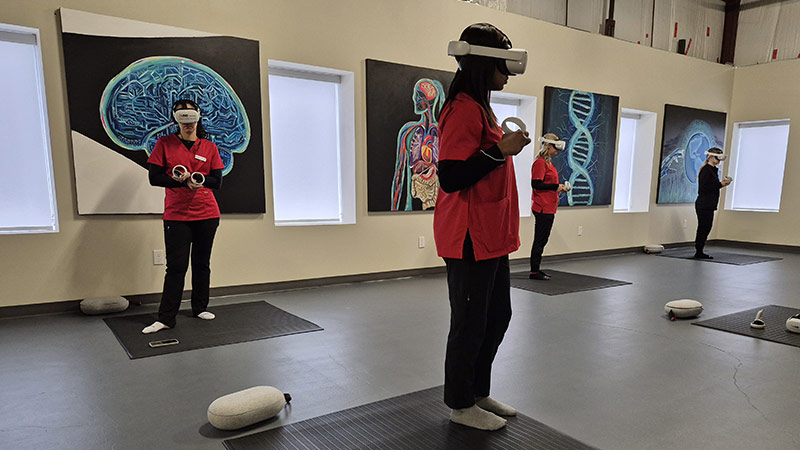
For Michael Hart, a nursing student at the Moncton site, simulation offers a safe way to learn how to care for older adults.
“Simulation is something I have a lot of experience in from my time in the military. I feel it is a great learning tool to introduce students to real-life scenarios in a controlled setting,” he said.
“Making students recall critical information in a time-sensitive scenario helps to strengthen key skills needed to succeed as a nurse.”
Hart said mistakes in simulation become lessons, not risks.
“Having the chance to strengthen our skills in practice while making mistakes without causing harm will pay off in our future careers,” he said.
“Simulation and VR provide solid experiences we can rely on while working as RNs.”
Expanding access
Williams said this reflects a shift in nursing education, where the mistakes that come with learning do not affect clients in clinical settings.
“Errors are going to happen, so what we like to do is create safe places for people to make mistakes,” she said.
Gordon sees the next step in simulation-based learning related to the care of older adults as even more detailed.
“We expect growth in scenarios that include end-of-life decision-making, advance care planning and team conversations about care goals,” she said.
One simulation exercise gave Hart a new view on dementia by putting him in a client’s shoes, so to speak.
“The main goal of the simulation is to live for a short time as someone with dementia,” said Hart.
“After doing this simulation, I am better prepared to provide care more patiently and compassionately for the older adult.”